
How deep is the UK’s digital divide?
Emma Bradley, Data Analyst, explores the depths of the digital divide following the release of Good Things' latest state of the Digital Nation.
What is the state of our digital nation?
In today’s rapidly evolving digital landscape, having the necessary access, skills, and confidence to interact digitally is no longer a luxury,it is the baseline for full participation in society. Yet, as our world becomes increasingly "digital-by-default," millions of individuals remain locked out, facing a growing risk of being left behind. Understanding who is being excluded, and why, is vital for making informed policy decisions and allocating resources where they are needed most.
To map this reality, we have launched Digital Nation 2026. For over a decade, Good Things has collated national datasets, public polling, and authoritative analysis to show the true scale of the UK’s digital divide.
This year's update incorporates the latest findings from Lloyds’ UK Consumer Digital Index and Essential Digital Skills reports, Ofcom’s Communications Affordability Tracker, and Public First polling. Crucially, for the first time, we are also featuring data gathered using our co-developed Indicators of Digital Inclusion (IDIs)—a unified measurement tool designed with cross-sector experts to capture the true depth, breadth, and barriers of digital exclusion
To explore how the digital divide has changed, we are highlighting 6 of the critical numbers and insights from our Digital Nation 2026 update, showing how the landscape has shifted since our last major report.
1) Only 1 in 3 adults are "comfortably online"
In previous years, we measured digital exclusion through specific household markers, such as the number of families falling below the Minimum Digital Living Standard. In 2026, our new Indicators of Digital Inclusion (IDIs) allow us to see a much more complete picture.
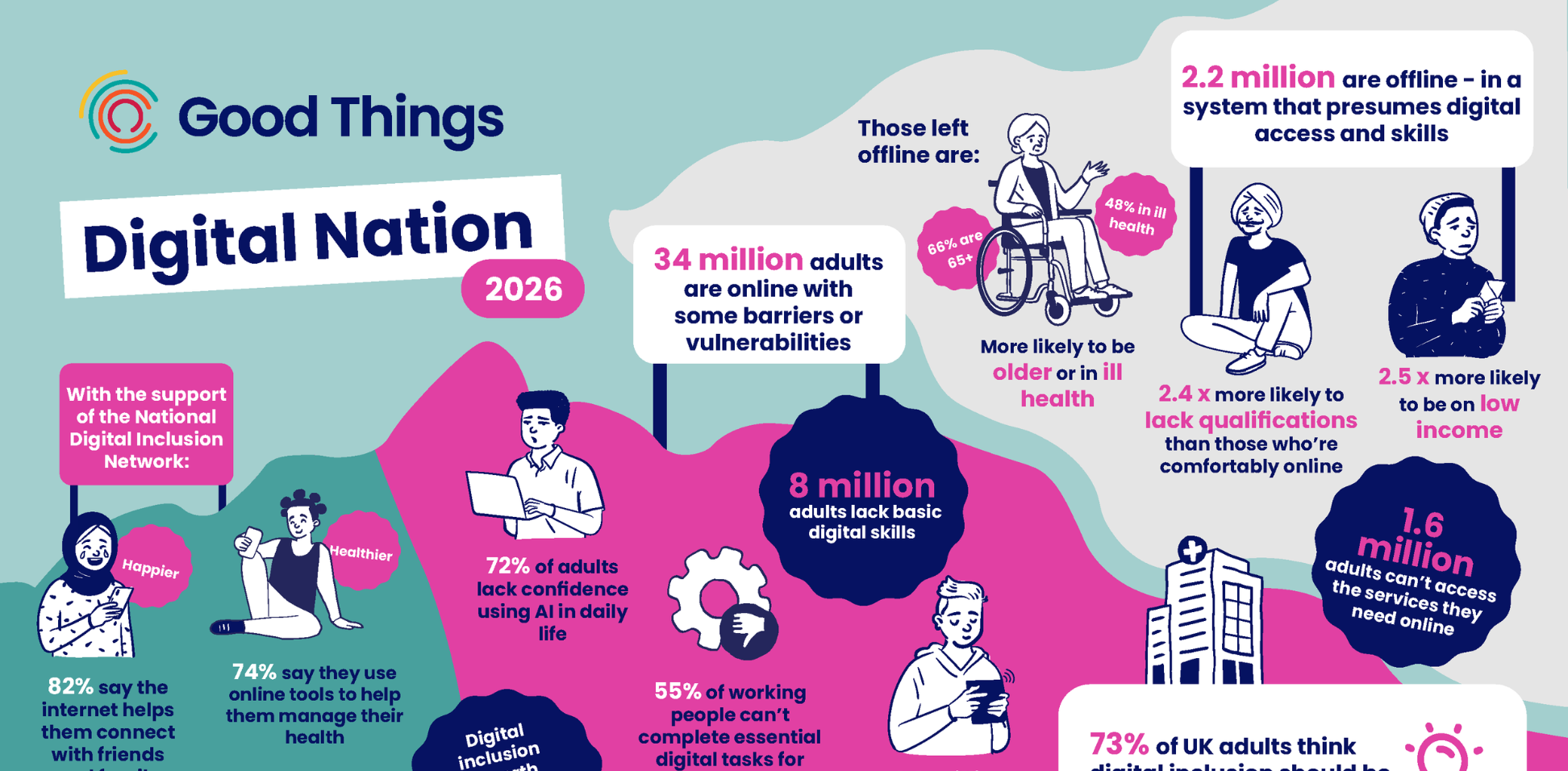
The reality is that only 1 in 3 UK adults are currently "comfortably online".
This means that the vast majority of the population faces some form of digital vulnerability. Specifically, 34 million adults are online with some barriers or vulnerabilities—whether due to unstable connectivity, a lack of confidence, or relying on the support of others. At the far end of this divide, 2.2 million adults remain completely offline, locked out of a societal infrastructure that presumes everyone has seamless digital access and skills.
2) 8 million adults lack basic digital skills
The number of adults in the UK lacking basic digital skills has remained relatively steady from 7.9 million in 2025 to 8.5 million in 2024 and now at 8 million today. Indicating that the number of people who lack digital skills is stagnating. We must also look to the future on how technological changes (such as AI) could both improve and widen this gap.
As workplace technologies advance, basic digital capability is no longer enough to secure or maintain employment. Today, a staggering 55% of working people cannot complete all essential digital tasks for work. Without targeted digital skills training, millions of workers face being locked out of career progression, compounding broader labor market inequalities and limiting productivity.
3) The offline premium: saving £815 more per year through digital capability
In 2026, the financial penalties of digital exclusion remain large.
According to the latest Lloyds Consumer Digital Index, individuals with higher digital and financial capability save an average of £815 more per year. In a persistent cost-of-living crisis, digital capability acts as an essential buffer, allowing people to manage bills, find better deals, and budget effectively online.
Conversely, digital exclusion remains deeply intertwined with poverty and social deprivation:
- People who are offline are 2.5 times more likely to be on a low income.
- 2.3 million households struggle to afford their basic mobile phone contracts.
- Those offline are 2.4 times more likely to lack qualifications compared to those who are comfortably online.
4) Fear of being left behind is growing
Two years ago, we reported that 21% of people felt left behind by technology. Today, that anxiety has nearly doubled. As public services, banking, and essential utilities migrate rapidly online, 40% of adults are worried about being left behind.
This fear is being accelerated by the breakneck pace of emerging technologies. Our latest data shows that 72% of adults lack confidence using Artificial Intelligence (AI) in their daily lives. When we fail to support people in building confidence with new digital tools, we don't just exclude them from the future,we erode their confidence in navigating the present, driving feelings of isolation and inadequacy.
5) Digital inclusion is worth £13 billion to the UK economy
Investing in digital inclusion has never been just a social responsibility; it is a profound economic strategy. Authoritative analysis by the CEBR confirms that achieving a digitally inclusive UK is worth £13 billion to the UK economy, unlocking new waves of productivity, digital innovation, and growth.
6) Public is demanding action
The British public understands this value and is strongly calling for systemic change. In our latest Public First polling:
- 72% of adults believe the government should be doing more to tackle digital exclusion.
- 73% believe digital inclusion should be built into the design of public services from the very start.
- 82% believe that everyone should have the skills and access needed to use the NHS app safely and confidently.
What are we doing to turn our Digital Nation into a place of inclusion?
Through our collaborative work with politicians, businesses, and communities, progress has been made. However, with 1.6 million adults still unable to access the services they need online, our mission to fix the digital divide for good is more urgent than ever.
Good Things is leading this charge on the ground through the National Digital Inclusion Network - a coalition of 5,000 local community organisations. Together, we deliver a four-pronged lifeline:
- National Databank, helping people get connected with free mobile data
- National Device Bank, helping people access refurbished laptops, phones, tablets and more
- Learn My Way, helping people learn beginner digital skills
- AI Gateway, helping people learn about artificial intelligence and how it can be used in everyday life and work
Our internal impact monitoring shows the life-changing power of this support. With the help of the digital inclusion hubs across the UK:
- 82% of people say the internet helps them connect with friends and family (making them happier).
- 74% can use online tools to manage their health (making them healthier).
- 74% have better opportunities for learning or employment (making them better off).
Frequently asked questions about the UK's digital divide:
How many people in the UK are digitally excluded?
Only 1 in 3 UK adults are currently "comfortably online." A further 34 million adults are online but face some form of barrier or vulnerability, such as unstable connectivity or low confidence, and 2.2 million adults remain completely offline.
How many UK adults lack basic digital skills?
8 million adults in the UK lack basic digital skills, down slightly from 8.5 million in 2024. However, 55% of working people cannot complete essential digital tasks required for their jobs, showing the gap is shifting toward the workplace.
How much does digital exclusion cost people financially?
People with higher digital and financial capability save an average of £815 more per year, according to Lloyds' UK Consumer Digital Index. Those who are offline are also 2.5 times more likely to be on a low income.
What is digital inclusion worth to the UK economy?
Analysis by the CEBR found that achieving a digitally inclusive UK would be worth £13 billion to the economy through gains in productivity, innovation, and growth.
What is Good Things Foundation doing to close the digital divide?
Good Things Foundation runs the National Digital Inclusion Network, a coalition of 5,000 local community organisations, delivering free mobile data through the National Databank, refurbished devices through the National Device Bank, and beginner digital skills training through Learn My Way.
How you can help
We cannot fix the digital divide alone. Whether you are a business looking to contribute retired IT equipment to our National Device Bank, a community group looking to join our National Digital Inclusion Network, or an advocate pushing for policy change, your involvement makes a difference.
- Download the full Digital Nation 2026 Infographic and Sources to explore the data.
- Use the Indicators of Digital Inclusion to understand how Digital Inclusion is affecting your local population
- Take action for digital exclusion and learn how you can partner with us or donate devices.
Together, we can bridge this gap—not just making the divide narrower, but closing it for good.
You may also be interested in
-
 14/07/2026 Research & evidence
Our Digital Nation
What is the state of the UK's digital divide? Each year, Good Things Foundation gathers new facts and stats to reveal the reality of digital exclusion.
-
 13/05/2026 Digital inclusion insights
Digital inclusion: listening, leading and looking ahead
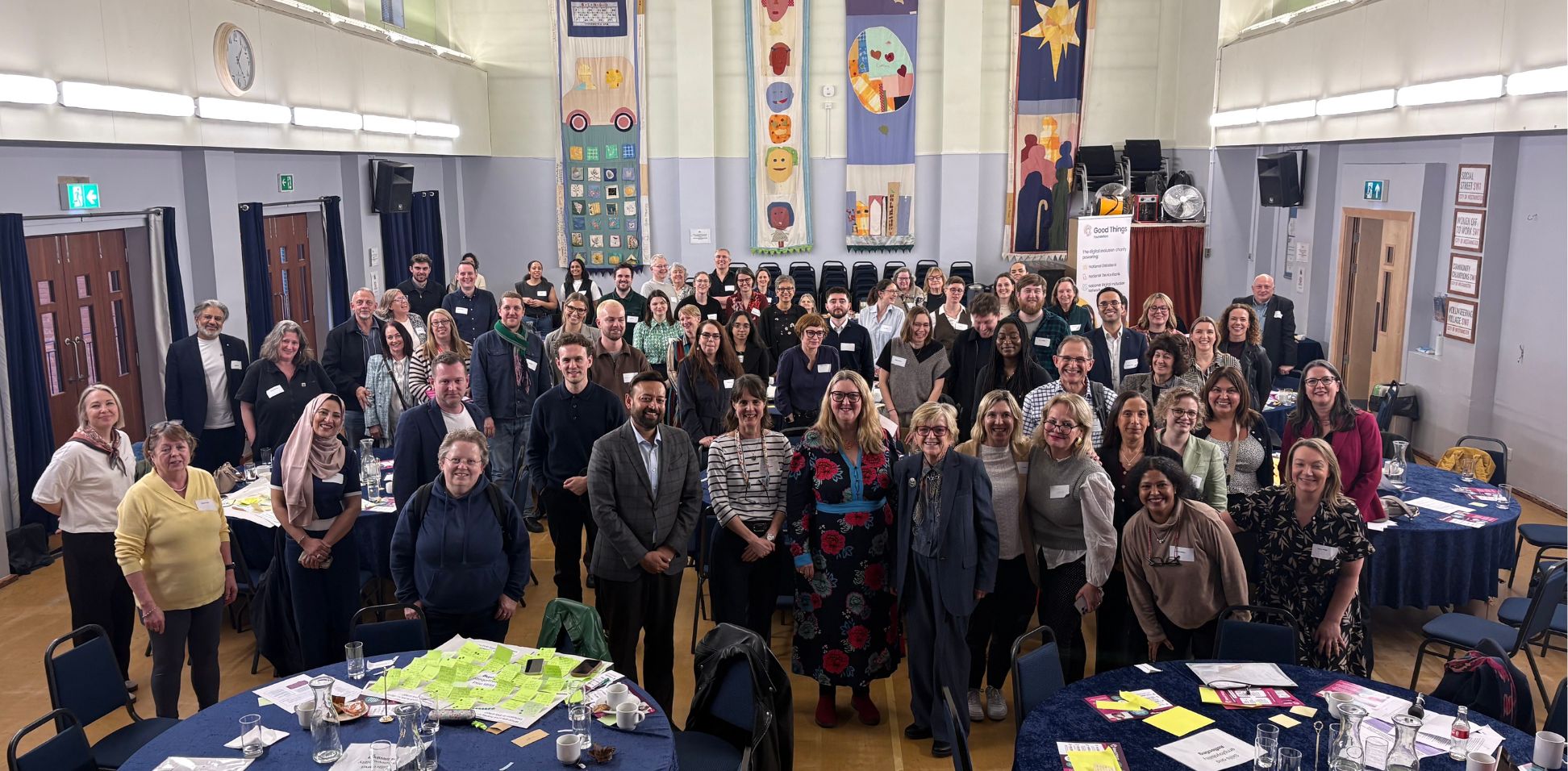
We gathered a group of experts on digital inclusion in March to get ahead of technological change and chart a path for collective action and proactive design in a AI-driven world. Discover what we heard, where we are and where we go now.
-
 06/05/2026 Digital inclusion insights
Keeping the digital front door to healthcare open to everyone
Healthcare is becoming digital, but access is not equal. James Muscat-Sharp discusses what counts as “lack of means” in a digital age?